Bank of Canada Holds Rate at 2.25%
What does the bank's announcement mean for you.
MORTGAGE MARKET UPDATE | June 10, 2026
What The Bank's Announcement Means For You
Bank of Canada Holds Policy Rate — What This Means for You
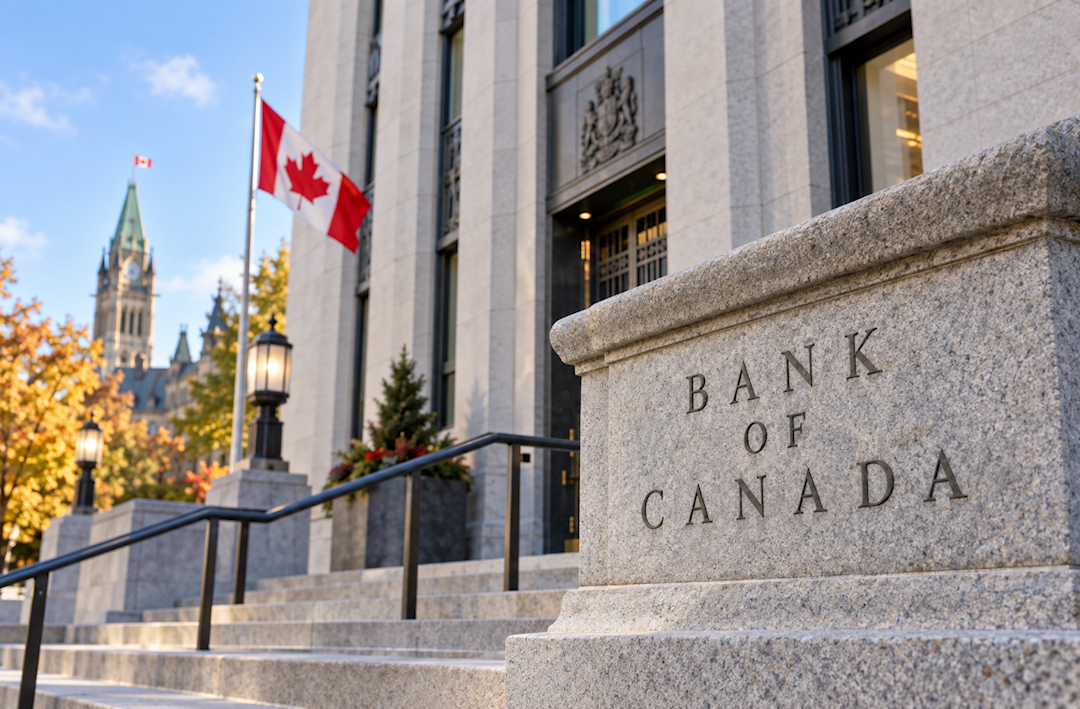
Today, the Bank of Canada announced that it is holding its overnight policy rate steady at 2.25%, which means variable mortgage rates and lines of credit tied to prime are expected to remain unchanged for now.
While a rate hold may feel uneventful on the surface, this announcement comes at an important time. The Bank is trying to balance two competing pressures: a softer Canadian economy, which argues against higher rates, and inflation risk tied to global energy prices, which argues against cutting rates too quickly.
For clients holding a Variable Rate Mortgage (VRM) or Adjustable Rate Mortgage (ARM), today’s announcement is not a reason to panic — but it is a good reason to review your strategy.
The Economic Picture: A Balancing Act
| Indicator | Current Status |
|---|---|
| GDP Growth | Weak — Canada’s economy has shown clear signs of slowing, which limits the Bank’s appetite for rate hikes. |
| Employment | Mixed — recent job data has improved, but the broader trend remains uneven and cautious. |
| Inflation | Elevated — higher energy prices have pushed headline inflation closer to the top end of the Bank’s target range, but there is still limited evidence that this has become broad-based inflation. |
The Bank of Canada is in a difficult position. Cutting rates could help support a weakening economy, but doing so too early could risk allowing inflation to become more persistent. Raising rates could help fight inflation, but it could also put additional pressure on households, businesses, and the housing market.
For now, the Bank has chosen to stay on the sidelines.
What This Means If You’re on a Variable or Adjustable Rate
If you currently have a VRM or ARM, today’s announcement means your rate should remain unchanged for the time being.
Our view is that continuing to ride your variable rate remains a reasonable strategy for many borrowers, but the outlook is more balanced than it was earlier in the year.
Here’s why:
- With economic growth soft, the Bank of Canada has limited reason to raise rates aggressively unless inflation becomes more persistent.
- The current inflation pressure appears to be largely connected to global energy prices and geopolitical uncertainty, rather than a strong, overheating Canadian economy.
- The Bank has indicated that it is looking through some of the short-term energy impact, but it has also made it clear that it will act if inflation starts spreading more broadly.
In simple terms: the most likely near-term path still appears to be stability, but variable-rate clients should be aware that the chance of a future rate hike has not disappeared.
Thinking About Locking In? Here’s the Math.
We understand that variable rates can feel uncomfortable, especially when the economic headlines are mixed. If the uncertainty is causing stress, locking in may be worth discussing.
But before making that decision, it is important to look at the actual cost.
In many cases, today’s available 5-year fixed rates are still meaningfully higher than existing variable rates. If your lock-in option is approximately 0.75% higher than your current variable rate, then locking in is not necessarily a money-saving move.
It is a trade-off.
You would be paying a higher rate today in exchange for payment certainty.
- If prime stays flat, locking in would likely cost more over the term.
- If rates fall later, locking in could mean missing out on potential savings.
- If rates rise and stay higher, locking in could provide protection.
To put it simply: locking in is buying certainty, not guaranteed savings.
That may still be the right choice depending on your budget, comfort level, and long-term plans — but it should be a calculated decision, not a reaction to one announcement.
For a lock-in to become cost-neutral, the Bank of Canada would generally need to raise rates enough — and keep them there long enough — to offset the higher fixed rate you are accepting today. Given the current economic backdrop, that is possible, but it is not our base case for most clients.
Our Recommendation
For most variable-rate clients, we suggest staying the course for now.
Today’s rate hold supports a patient approach. The economy is showing signs of weakness, and while inflation remains a concern, the Bank has not yet seen enough evidence of broad-based inflation to justify raising rates today.
That said, this is not a one-size-fits-all decision.
Locking in may make sense if:
- You have a tight monthly budget
- You are uncomfortable with rate uncertainty
- You are approaching renewal
- You plan to sell or refinance soon
- You simply value payment stability over potential savings
If you are unsure, we are happy to review your mortgage, compare your current variable rate against available fixed-rate options, and help you understand the real cost of locking in.
Please don’t hesitate to reach out. We are here to help you make the decision that is right for you, not just the market.
This newsletter is for informational purposes only and does not constitute financial advice.